
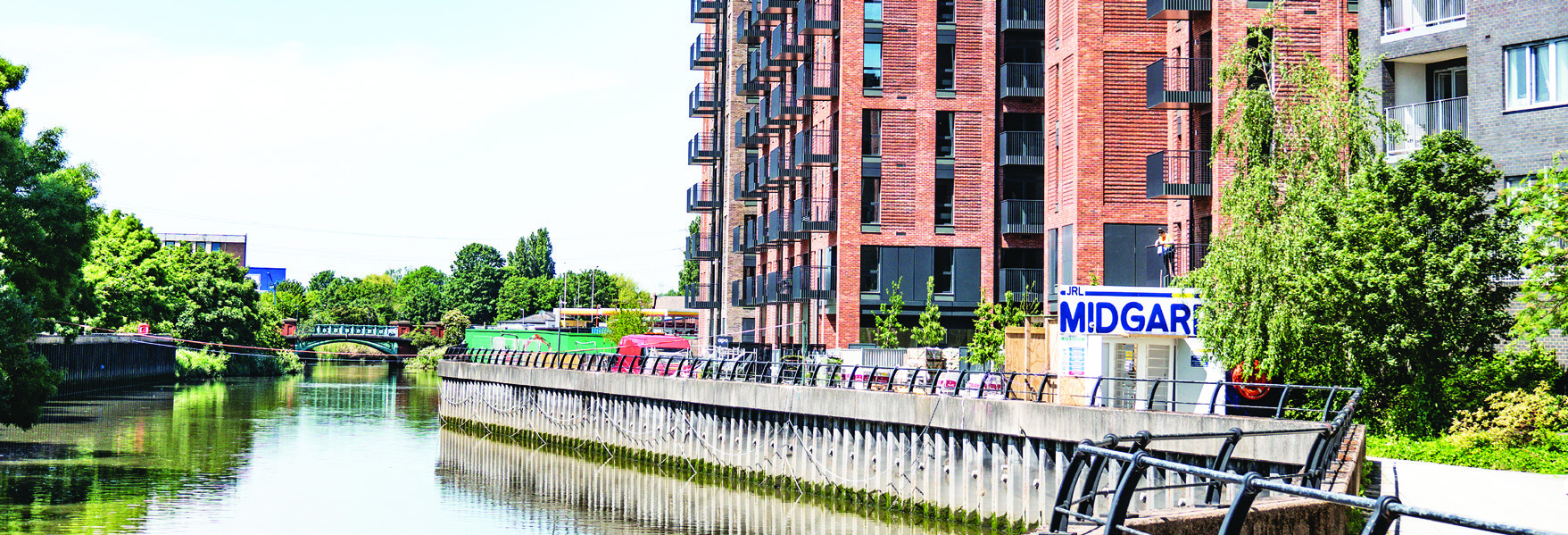

Brick is such a universal material that we almost take it for granted. In the UK especially, it is deep in our everyday psychology and portrays safety and stability. The phrase “bricks and mortar” is used in everyday speech to express the robustness of an idea or concept. And it’s true - bricks have been used in the UK for 2,000 years and have a minimum life of 150 years. Many houses last so long that they can pass down from generation to generation.
With the rise of modern methods of construction (MMC), however, it’s important not to forget the value that bricks can offer now and for future building.
High-rise appeal
Brick seems to be undergoing a renaissance with architects. Its appeal comes back to the fundamental properties it possesses. Builders can take an individual brick and use it for an unlimited amount of possibilities and designers are still finding new ways of using it. In recent years, there has been the rise of textured brickwork, perforated, hit and miss, and a return to decorative designs reminiscent of the Victorian and Arts and Crafts eras. Many architects are using it for minimalist designs, as in Scandinavian brickwork.
For these design ideas, bricks still offer good value and high performance as an individualized design can still be achieved for comparatively low cost.
In high-rise buildings, the approach to using bricks is very much project-specific. They may be chosen over brickslips and other MMC for their performance and ease of construction. It’s important for designers and architects to approach high-rise building as you would low-rise building - using the same supply chain and contractors. There is no need to use specialised unitised cladding contractors, where a façade might be shipped from thousands of miles away. Supply chains, and the programme as a whole, are subject to a huge amount of risk that way. By using brick you have the security of the local UK supply chain and the cost benefit of a bigger pool of contractors.
Using brick doesn’t always mean builders are forced down a scaffolding route that can add a layer of complexity onsite. Many in the industry use mast climber solutions, where masonry support angles are put in every two floors, enabling builders to work in multiple locations at any one time. Working this way has produced good examples of high-rise residential brickwork delivered by the big housebuilders. This is especially true in the wake of construction quality and building safety changes and should be considered alongside MMC as one solution to combat the ever-growing need for residential buildings. For that reason, the overarching vision that brick offers continues to be very appealing.
Brick and MMC
All this is not to say that the construction industry should choose brick every time for their projects. Any MMC systems will be more expensive but the important trade-off is they are lighter and quicker to install. They make more sense for balconies especially. Onsite coordination when using brick can indeed be more complex and weather dependent. MMC products, though, are very reliant on installation being carried out perfectly to fit around ventilation and gaskets for example, and many systems are more expensive than bricks.
It’s important to acknowledge when and where bricks or MMC would best suit a project – one will most likely work better than the other depending on the brief. When time is money, MMC is the best solution and has a lot to offer, while brick is flexible and can accommodate much of the new innovations we’ve seen. It is compatible with most systems and, pre-cast systems and 3D panels can all be clad in brick.
Experienced architects will know that each has its benefits. The important thing is to share best practice to get the best out of all materials and systems.
“Bricks still offer good value and high performance.”
“It’s important to acknowledge when and where bricks or MMC would best suit a project…”