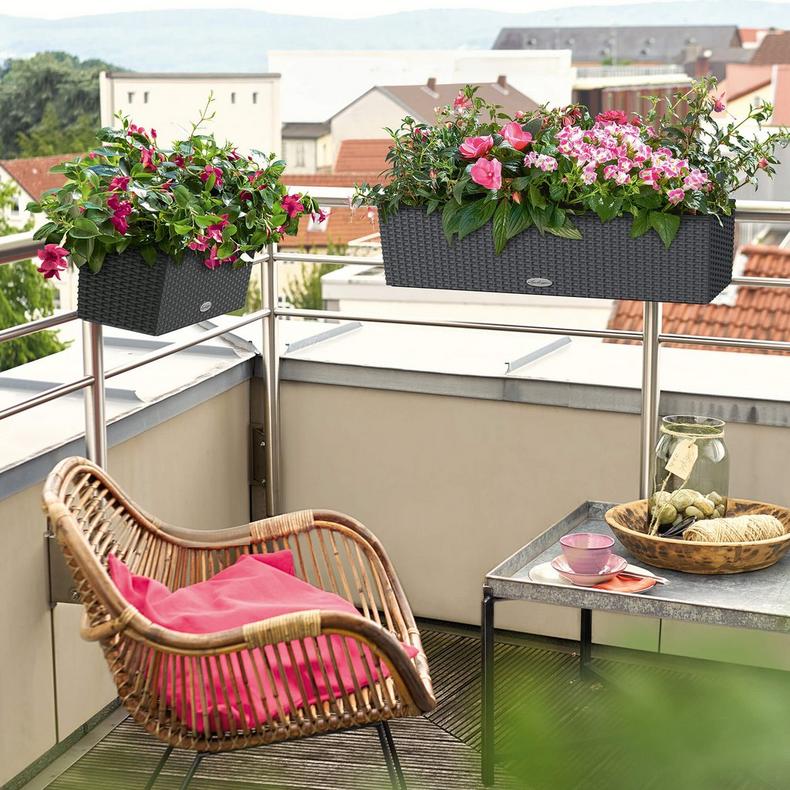

With the increase in urbanisation in the last few decades the rate of residential apartment construction has risen sharply – with a current estimate of up to 2.5 billion apartments globally. As more and more people choose to live in cities for work, the fight for living areas has become an issue that designers and architects are regularly addressing. With that has come the need to make the most of the space available and that includes balcony space. But in the UK especially, many balconies are forgotten spaces. Most are used for storage or as dumping grounds. So how can residents make balcony life more enjoyable?
It’s not as hard as you might think.
Transforming a balcony from a dumping ground to an oasis is easier than many people think. It’s important to start by understanding the balcony’s huge potential to transform living experiences. The UK is behind their European counterparts when it comes to making balconies an integral part of a home but it’s never too late to reinvigorate the space for all manner of activities. Remember, it may be the only outdoor space residents have regular access to, so to use it to its full potential will bring about positive changes in all areas of their lives.
Be creative!
Of course, because of the dual issues of restricted outside space and the unpredictable weather in the UK, residents need to get the very best out of their
balconies. With the right vision and accessories balconies can be used for dining, growing a small garden, exercising and meeting neighbours.
There are many products on the market designed for small areas, so residents can get really creative with their balconies. A growing trend is for gardening at height and it’s easy to set up a micro-allotment with clever planting and watering systems. Similarly, regular dining can work outside just as well as inside, with furniture created specifically for balconies. During 2020 especially, they became mini-advertisements for how residents live, as they have had more time to tend to their balconies during lockdown.
The impact of COVID
Residents turned to their balconies to make the most of their living areas during the 2020 COVID lockdown. Many turned them into work areas, some into an oasis of calm away from the busyness of the indoors. Lots of balconies were turned into mini gyms when going outside was difficult and gyms were shut.
Loneliness impacted people’s wellbeing significantly, with one study stating it had as much impact on our health as smoking twelve cigarettes a day. The opportunity to connect with others and encourage offline connections as well as online was facilitated by many high-rise residents. Many balcony communities were born out of the isolation of lockdown. An example of this was a group called the balconettes who stay in touch and meet on each other’s balconies once a week to combat the loneliness they felt.
Don’t underestimate a balcony
Developers and planners sometimes underestimate the importance of balconies in residents’ lives, whether they are a single dweller or a family. They make available light, space and air for people living in a small environment. They offer recreational space to both children and adults alike. Innovative solutions could see the reinvention of balconies over the coming years. The size of balconies especially could change dramatically with the increased demand for high-rise buildings in urban areas, coupled with the need to have extra outside space without the need to purchase more land for the development. Again, the UK trails behind the rest of the world here. The average size of a balcony in the UK is 4m², whereas in Canada it’s twice that. The benefit of decarbonisation and the local wildlife that balcony gardens can bring to cities is also largely underestimated.
Resources for designers and architects to improve living experiences for residents can be found at resident engagement groups, and in ARMA in particular. Talking to residents who live in the apartments and putting yourself in their shoes gives an invaluable insight into how designs can be improved right at the earliest stage.
“Talking to residents … gives an invaluable insight into how designs can be improved right at the earliest stage.”
Supporting images