Accidents that occur on construction sites often happen because of an oversight that can nearly always be avoided. It might be that a product hasn’t been packed correctly or stillages that have been used that don’t support the site conditions.
It’s easy to assume that safety is at the top of the agenda when manufacturing products offsite, but factory conditions will be very different to a construction site. Weather conditions exist outside of a factory and surfaces will be very different onsite to the controlled conditions of a manufacturer’s building.
To look at risks and pre-empt accidents, architects need to look at every scenario in their design.
Early engagement is key to safety
In terms of cladding, balconies or indeed anything that goes onto the external envelope of a building, you have got to have early engagement from the supply chain. This should ideally start when the design is just out of stage two.
A project must be developed collectively, so that safety is designed into the onsite programme. This should include the main contractor, supplier and contractor involved in the installation. Together with designers and manufacturers, they can look at lifting points, weights and ratios, all of which lead to working out how to package and deliver products to site and install
them safely. Having all the information in front of the collaborators is also key. This means finding out the fine details, such as what the procurement route is and what processes have been subcontracted.
If you follow the process of initial thoughts to design to packaging and delivery, logistics and method of installation and bring all that information together early on you can avoid most incidents and accidents. And let’s not forget getting the most competent people to be on board!
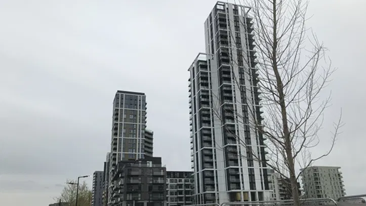
A great example of where early collaboration made a difference is on the 35-storey tower called The Waterman in Greenwich. The land is next to the river, with all its built-in climactic conditions. Engagement early on with contractors showed us it was quite clear that we needed to stop looking at cost and look at value, which comes in many different forms. We used Scheldebouw as the façade contractor because of their careful consideration of safety. They designed stillages especially for the job, where the clamps could only be released if no one was standing in front of the panel. This lesson was learned in an incident from a previous project where a panel came free from a stillage and caused serious injury. The value of early engagement won’t show up on a cost analysis, but it gives great value to the project. As a consequence, there were no first aid incidents on the external envelope of that project.
I have personally taken that learning to every project I have done or advice I have given since.
Digital tools to enhance safety
To enhance safety even further plans can be made pictorial through a digital platform. A 60-page written instruction booklet is not going to mean much or be effective in any action plan, because people simply don’t have the time to read and then disseminate the information to the relevant people. A digital format is available to everyone from any tablet or phone.
A good way to take safety even further is to look at it through the process of something called “show me”. This is where everyone gets together and records the process of, for instance, lifting a panel into place: from taking it off the lorry to its lifting equipment then putting it into place. From that, a risk assessment can be done alongside changes to the process that ensure maximum safety.
“Continuing a collaborative practice throughout the design and build process means you are building a culture of safety.”
Monitoring to kick out complacency
It’s important to not let complacency set in during later stages. Continuing a collaborative practice throughout the design and build process means you are building a culture of safety. Everyone has to continue on the journey for it to work successfully. Clients and main contractors need to be open to advice from the supply chain very early on.
It might be that you don’t choose a certain supplier but if they are involved in advice, they need to be recompensed. All too often clients assume that the supply chain can be used to get free information. Keep the competitive edge in all interactions and pay suppliers for their advice – it is a service they are supplying.
Monitoring price, safety, programme and quality and reputation needs to be done throughout too. Anyone can get a cheap price, what you need is to get the right price and that means looking at the value people and products bring. Once that is recognised, it changes the culture and filters down to the rest of the contractors and installers. Someone who is installing a panel feels valued because he has been involved from the start, especially if you are using the “show me” process. To ensure sites are safe, a change in culture means that suppliers and installers are part of the decision-making process to keep onsite safety a priority.
Designing out risk
Compressing timescales can cause the most damage, both to personnel and materials. In competitive single-stage tendering especially, it’s all about the programme and it seems the easiest thing to do is cut times. Something like an NEC contract that allows for time-risk allowance can be built into the programme in a more collaborative way, more than perhaps a JCT contract might.
More client involvement in the procurement route could mean clients delivering their own projects. This would be a better process as it would allow more time on the project and a greater focus on safety. Pressure points are often with the supply chain so again, early involvement is key.
MMC brings certainty around quality as products are built in a controlled and qualityassured environment, which brings certainty to a programme. The fewer people on site, the less chance there is of accidents happening. MMC can also bring certainty to costs – you know what your cash flow forecast is as you have certainty of the products coming off the production line. At the end of the design and build process many contracts end up in dispute, but MMC will mitigate the amount of dispute that occurs, making the whole process simpler because you design the safety into any components and hazards are eliminated in the factory.
For balconies that are now designed offsite, hazards have reduced immensely. For concrete balconies in the past, it was difficult to know who had the overall responsibility of managing them, as there were so many elements to the design and build of the balcony, each with their own inherent hazard.
All this isn’t to say that safety hasn’t advanced over the years. Largely due to a mix of leadership from clients, education and supply chain engagement, onsite safety has greatly improved. Having the client engaged in a project is key to bringing all of this together.
Technology has played a major part in making sites safer, with QA processes in place from factory to site – all done on a phone or tablet. There is lots of free education from manufacturers who want to do things right and pass that knowledge on and a push for operatives to have more of a voice and be involved in creating method statements.
The biggest safety risk to the external envelope is not getting the design and the logistic strategy right. Getting the onsite logistics in place, where control measures are already in place informs the design and ensures the safest possible construction site.
“The biggest safety risk to the external envelope is not getting the design and the logistic strategy right.”
“Technology has played a major part in making sites safer…”
Supporting images